From confusion to completion
February 24th, 2026
Designing the waste characterisation course was a journey marked by confusion, discovery, collaboration, and ultimately growth. What initially seemed like a straightforward assignment quickly evolved into a deep learning experience that reshaped how I understand course design, audience needs, and the value of practical knowledge.
During my internship at Three Mountains, I was both excited and surprised to be given the responsibility of developing a complete e-course independently after only a few months. The course was part of a series created for WASAC on waste management, and my specific focus was waste characterisation. The objective was to teach professional planners how to conduct surveys that analyse the types and quantities of waste generated by households, markets, schools, and businesses within a defined geographical area. Such data is essential for designing effective waste management systems. Decisions about collection methods, recycling programmes, treatment facilities, and disposal sites must be based on accurate evidence rather than assumptions.
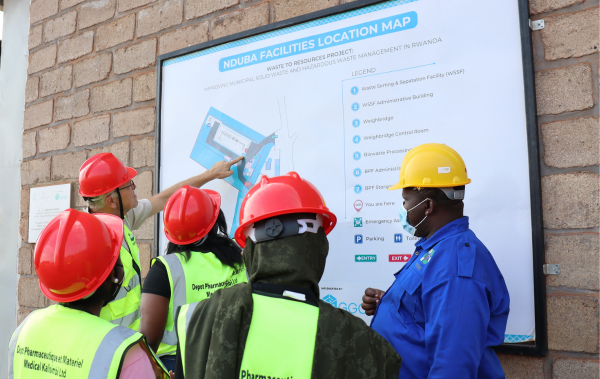
We visited the Nduba dumpsite to observe how waste is measured, sorted, and processed in real-life conditions. This experience made the assignment feel meaningful and practical. I immersed myself in the content, confident that I was creating something valuable. However, as I explored the topic further, I became fascinated not only by the technical aspects but also by what waste reveals about people’s behaviours and daily routines. That curiosity unintentionally led me away from the course’s intended audience. Instead of focusing strictly on professional planners, I began developing content that could appeal to myself, the general public and beginners as well.
At the time, this approach felt appropriate because raising awareness about waste management is important. Yet feedback soon revealed a difficult truth: the course was not meant for everyone. It needed to remain targeted and professional. Accepting this was uncomfortable. I had to revise large sections, redesign activities, and restructure explanations. Each revision felt like starting over, and at one point, there was even a suggestion that I abandon the course entirely. That moment was painful because this was my first course, and I wanted it to succeed.
What kept me going was the belief that waste characterisation is too important to approach casually. Without proper surveys, planners are forced to guess, and entire systems can suffer. Support from a colleague became a turning point. Their guidance and encouragement helped me realise that struggle is part of learning, not a sign of failure.
Eventually, we presented a draft to professionals from multiple institutions for review. Their insights improved the course significantly and introduced the idea of creating learner categories for consumers, beginners, and technical professionals. Interestingly, my earlier mistake did not go to waste. The general-audience material I had created evolved into a new concept: the Waste Hero Challenge course, proving that missteps can still produce meaningful outcomes.
Completing this course taught me far more than technical knowledge. It strengthened my patience, persistence, and ability to understand an audience deeply. What began in confusion ended with clarity, marking an important milestone in my professional growth.
To all planners, educators, and new course designers, be fearless. Try, fail, learn, and repeat; this is how meaningful work is born.
Cyizere Doreen